
Your Shopify Store Is Slower Than You Think. We'll Prove It.
One store's LCP dropped from 18.6 seconds to 695ms after our audit. Same ad budget — more of it reaching people who actually saw the page. Find out what's slowing yours. Prioritized fix list in 48 business hours.
Our Shopify speed audit starts with one question: what's actually slowing your store down, and what does fixing it cost you every day you don't?
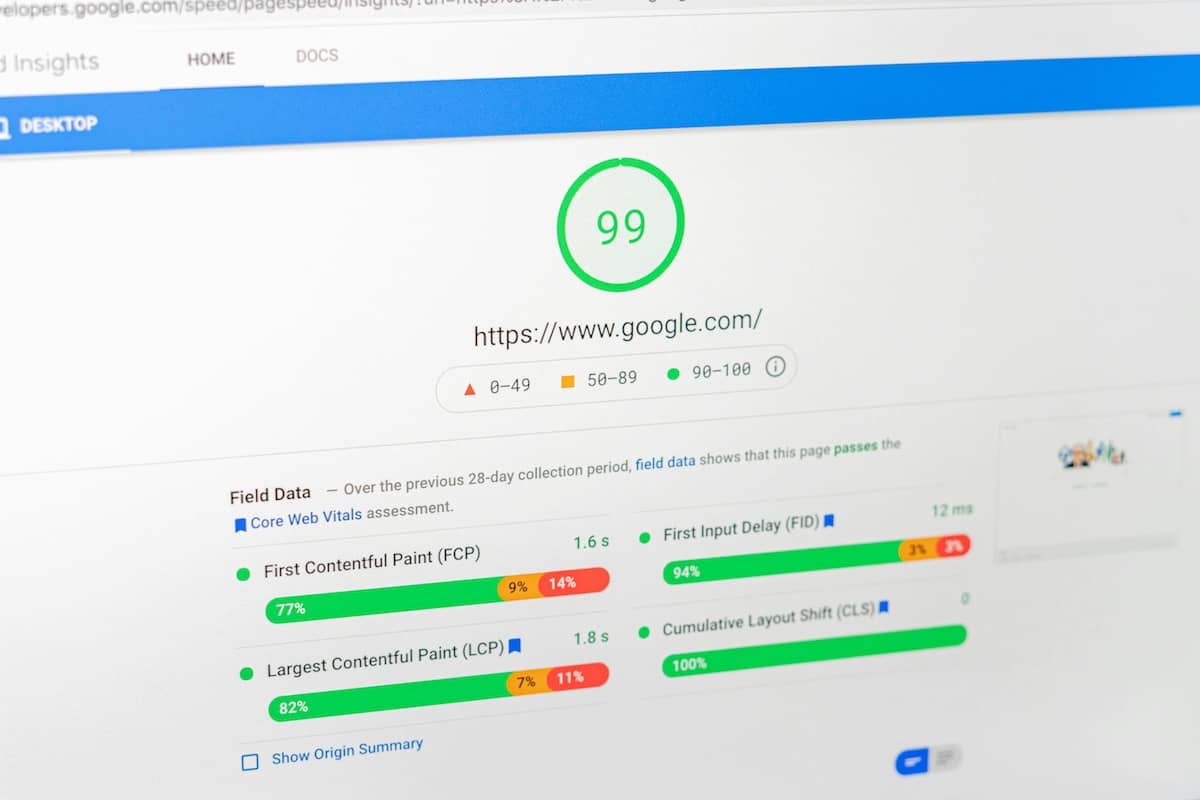
Before we touched one client's store, the homepage took 18.6 seconds to load on mobile. Lighthouse score: 53. They were running Meta ads to a store that most visitors gave up on before it finished loading. The Shopify speed audit is how we found it.
After our audit and implementation: LCP dropped to 695ms. Lighthouse moved to 82–86. Same ad budget. More of it reaching people who actually saw the page.

What Slow Actually Costs You
Most merchants know their store is slow. Most don't know how slow, and almost none have connected the slowness to specific revenue loss.
Research from Google shows that as mobile load time goes from 1 second to 3 seconds, bounce probability increases 32%. At 5 seconds, it's 90%. At 10 seconds, it's 123%.
If your LCP is 8 seconds on mobile and you're spending $5,000/month on ads, a significant portion of that spend is going to people who left before the page loaded. You're not losing them to bad creative or wrong audience targeting. You're losing them before they see anything.
This is the problem the Shopify speed audit exists to solve: find exactly what's causing the slowness, rank it by impact, and give you a clear list of what to fix first.
What We Audit: Core Web Vitals & Beyond
Core Web Vitals
Core Web Vitals are Google's ranking signals for page experience. We measure all three: LCP (Largest Contentful Paint — how fast the main content loads on mobile and desktop), CLS (Cumulative Layout Shift — whether elements jump around as the page loads), and INP (Interaction to Next Paint — how quickly the page responds to user input).
PageSpeed Insights Analysis
Full mobile and desktop reports. Specific opportunities identified (image sizing, render-blocking resources, unused JavaScript). Diagnostics broken down by impact so you know what's worth fixing and what isn't.
GTmetrix Waterfall Analysis
Waterfall view of exactly what loads, when, and how long it takes. Identifies third-party scripts that are delaying page render — often the single biggest culprit behind slow LCP scores.
App Bloat Identification
Review of every installed app and its performance impact. We flag apps loading scripts on pages where they're not needed and identify apps that are installed but not actively used — dead weight on every page load.
Redundant Script Identification
Duplicate tracking scripts (two versions of GA4, Meta Pixel loading twice), theme scripts conflicting with app scripts, scripts loading synchronously that should load async. These are invisible to the naked eye and regularly add seconds to load time.
What You Get Back
The audit delivers a prioritized fix list in 48 business hours. Not a generic report — a specific, ranked action plan.
- Every issue found, ranked by impact on LCP and overall score
- Specific fix for each issue — not "optimize images" but "compress [filename] from 2.3MB to under 150KB using WebP format"
- Estimated improvement in LCP or score for each fix
- Difficulty rating — can you do it yourself, or does it need a developer
You'll know exactly what to do, in what order, and what each fix is worth. If you've been searching for a Shopify page speed fix, this is where you start.


18.6 Seconds to 695ms. The Audit Cost $199.
The 18.6-second LCP wasn't exceptional. We see scores like this regularly.
That client was running a fashion accessories store. The problems were layered: a premium theme loading 34 JavaScript files, a review app loading its full widget on every page including pages with no reviews, an exit-intent popup app loading a 400KB script on mobile, and product images that had never been compressed — some over 4MB each.
None of this was obvious from looking at the store. Everything appeared to work fine. The slowness only showed up when you measured it, and they hadn't measured it in two years.
The audit identified 11 specific issues. The top 4 — image compression, review widget configuration, popup app replacement, and removing three abandoned apps still loading scripts — accounted for 94% of the LCP improvement.
Developer time to implement all fixes. LCP: 18.6s → 695ms. Lighthouse: 53 → 82–86. That's what a proper Shopify LCP fix looks like: a ranked list of specific issues, not generic advice.
Who This Is For
The Shopify speed audit is for any merchant who:
- Is running paid ads and wants to verify the store isn't bleeding the budget on lost loads
- Has seen their Google rankings decline and suspects Core Web Vitals may be a factor
- Has noticed the store feels slow but hasn't measured exactly what's wrong
- Is planning a store rebuild and wants to document what the current store's problems are
- Has recently added several apps and wants to check the performance impact
It's also a useful starting point before committing to a larger engagement. If you're deciding between fixing the current store and rebuilding entirely, the speed audit will tell you whether the problems are fixable at the theme level or structural. If you want a full Shopify speed optimization service — audit plus implementation — we can quote that as a single engagement.
What's Not Included
The speed audit does not include implementing any fixes. You receive the diagnosis and the prioritized list. What you do with it is up to you.
Most clients either fix the top issues themselves (image compression, removing unused apps, switching a slow app for a faster alternative), hand the list to their developer, or come back to us for implementation as part of a Growth Retainer or Store Rebuild engagement.
If you want us to implement the fixes after the audit, we quote that separately. The audit findings make that quote accurate — you're not paying for discovery on top of the work.
Upgrade: Store Health Audit
The Speed Audit covers performance. The Store Health Audit ($299) covers everything else too.
In addition to the full speed audit, the Store Health Audit includes theme code quality review, app stack audit (redundant, conflicting, unnecessary apps), conversion flow review (homepage to product to cart to checkout), abandoned cart and email capture setup check, and basic SEO structure review.
If you want a complete picture of your store's health — not just performance — the Store Health Audit is the right choice for $100 more.
Store Health Audit — $299
Frequently Asked Questions
What is included in the Shopify speed audit?
Core Web Vitals analysis (LCP, CLS, INP), full PageSpeed Insights reports for mobile and desktop, GTmetrix waterfall analysis, app bloat identification, and redundant script identification. Delivered as a prioritized fix list ranked by impact.
Does the audit include implementing fixes?
No. The audit is a diagnosis — you receive the prioritized fix list and decide what to do with it. Most clients fix the top issues themselves, hand the list to their developer, or come back for implementation as part of a growth retainer or store rebuild engagement.
How long does the Shopify speed audit take?
48 business hours from order to delivery.
What is the difference between the Speed Audit and the Store Health Audit?
The Speed Audit covers performance only: Core Web Vitals, LCP, app bloat, and redundant scripts. The Store Health Audit ($299) covers all of that plus theme code quality, conversion flow, abandoned cart setup, and basic SEO structure — a complete picture of store health for $100 more.
Find Out What's Slowing Your Store Down
$199. Prioritized fix list in 48 business hours. The Shopify speed optimization service that starts with a diagnosis, not a guess.
Questions about what's covered? Get in touch.